
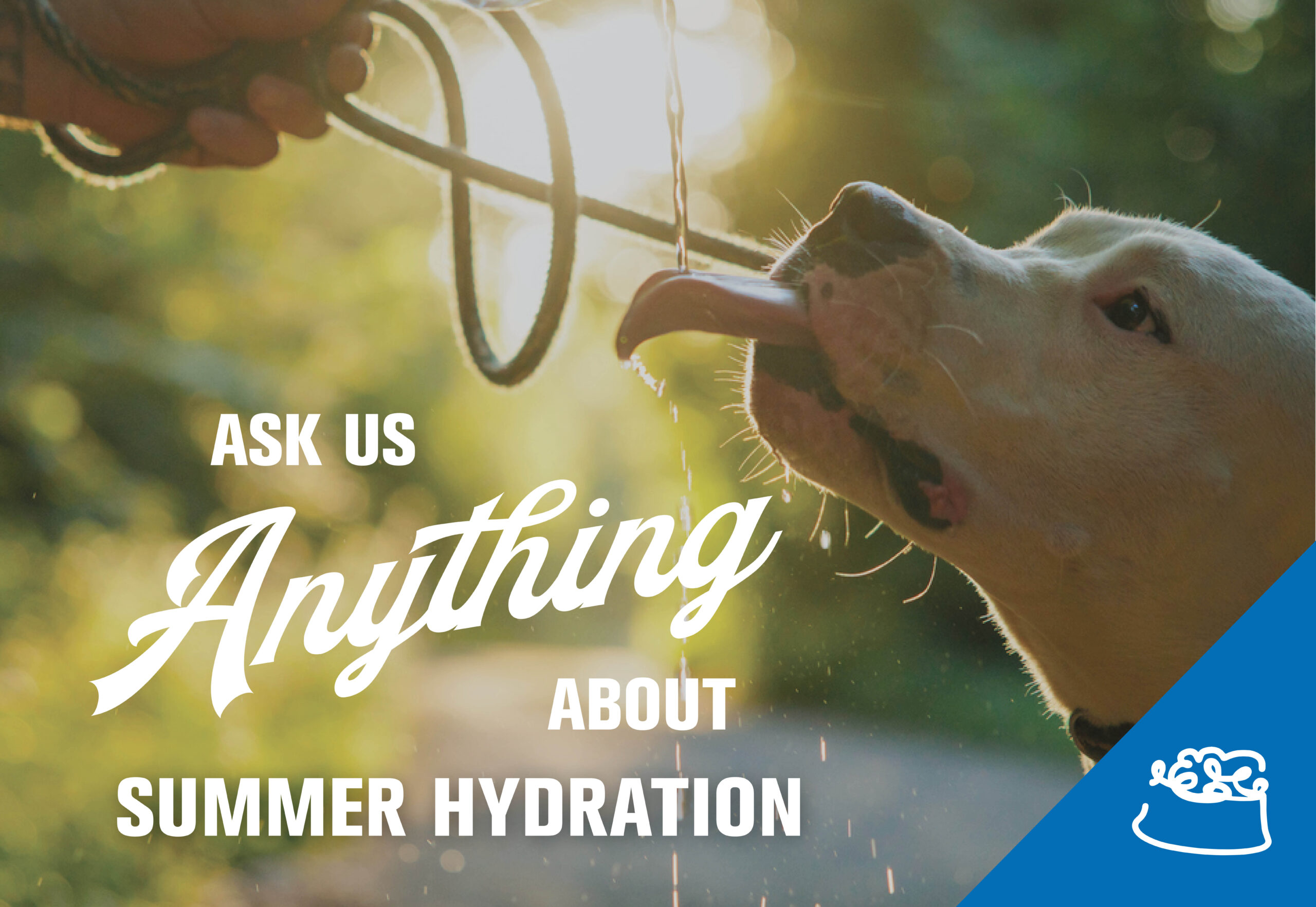
Keeping your dog or cat hydrated during hot weather is essential for their health and safety. Just like us, pets can become dehydrated when temperatures rise, especially during summer activities, travel and outdoor play. In this guide, you’ll learn the signs of dehydration in dogs and cats, how much water pets need each day and practical tips to help keep your pet hydrated all summer long.
Don’t have time to read the whole blog? Head to our Ask an Expert: FAQs for quick answers to questions about summer pet hydration.
WHY IS HYDRATION IMPORTANT FOR DOGS & CATS?
Since around 70% of your pet’s body is made up of water, proper hydration is key to their overall wellness. Keeping your pet hydrated is essential to the following bodily functions:
- Regulating body temperature
- Aiding with digestion
- Supporting nutrient absorption
- Flushing out toxins
- Cushioning joints and organs
Without adequate moisture intake, pets run the risk of developing heatstroke, kidney failure, constipation and more. As their humans, it’s our job to make sure they stay hydrated.
WHAT ARE THE SIGNS OF DEHYDRATION IN DOGS & CATS?
Preventing dehydration in pets is essential to keeping them healthy. So, how do you know if your dog or cat is getting enough water? Here are eight signs of dehydration in pets to watch out for:
- Dry or sticky gums
- Sunken-looking eyes
- Loss of appetite
- Excessive panting
- Low energy
- Thick saliva
- Dark yellow urine
- GI upset (vomiting, diarrhea or constipation)
WHAT IS THE SKIN ELASTICITY TEST?
When a dog or cat is dehydrated, their skin will become less elastic. To test this, gently pull up on the skin between your pet’s shoulder blades. If the skin quickly falls back into place, its elasticity is normal. If your pet’s skin remains “tented” before settling back into place, this can be a sign of low elasticity. To determine if low skin elasticity is a sign of dehydration, always assess it alongside other symptoms.
WHAT DO I DO IF MY PET IS DEHYDRATED?
If your pet shows signs of mild dehydration, encourage them to drink water or give them a hydrating bowl of bone broth or goat milk – they may be more eager to lap it up. For more severe signs of dehydration, contact your vet immediately and seek treatment so symptoms don’t worsen.
HOW CAN I KEEP MY DOG OR CAT HYDRATED?
Hydration for dogs and cats can be fun, enriching and delicious. The following moisture-rich foods are perfect for adding a boost of hydration (and flavor) to your pet’s daily diet:
- Raw & Fresh Food: Packed with moisture, nutrients and real animal ingredients, fresh and raw pet food makes the perfect meal or topper for your BFF.
- Wet Food: Just like raw food, wet food is loaded with more moisture than traditional dry kibble – plus, lots of yummy flavors for your pet to enjoy.
- Hydrating Meal Toppers: Add a tasty, hydrating topper – like goat milk, bone broth or pumpkin – to your pet’s bowl for a boost of vitamins, minerals and moisture.
- Frozen Summer Treats: Freeze your pet’s favorite hydrator for the perfect summer treat. Bonus: Use a rubber toy or lick mat for added enrichment.
- Pet-Safe Fruits: Use small amounts of pet-safe fruits, including watermelon, berries and cucumbers (yes, they’re a fruit!), as moisture-rich treats.
These pet hydration tips will help your best friend stay cool and refreshed all summer long – whether they’re soaking up the sun in the backyard, hitting the road for a summer stroll or cooling off indoors by the AC.
WHAT IF MY CAT DOESN’T LIKE DRINKING WATER?
If your cat turns their nose up at their water bowl, you’re not alone. Thanks to their desert-dwelling ancestors, many cats have a natural aversion to water. However, without proper hydration, cats run the risk of developing urinary tract infections (UTIs) and other health-related issues.
Worried your cat isn’t drinking enough water? Try these 10 cat hydration tips:
- Provide more than one water dish around the house: at least one per cat, plus an extra
- Try a cat drinking fountain – cats instinctively prefer running water because it’s less likely to be contaminated
- Keep water dishes away from your cat’s litter box and food bowl, as cats prefer not to drink near waste or “prey” which may contaminate their water
- Replace water frequently – many cats won’t drink water that’s been sitting out for a while
- Wash water dishes daily to keep them fresh and prevent smells which might deter your cat from drinking
- Use wide, shallow water dishes so your cat can drink without their whiskers touching the sides, which can be uncomfortable
- Opt for a glass, ceramic or stainless steel water bowl instead of plastic, which can affect the taste
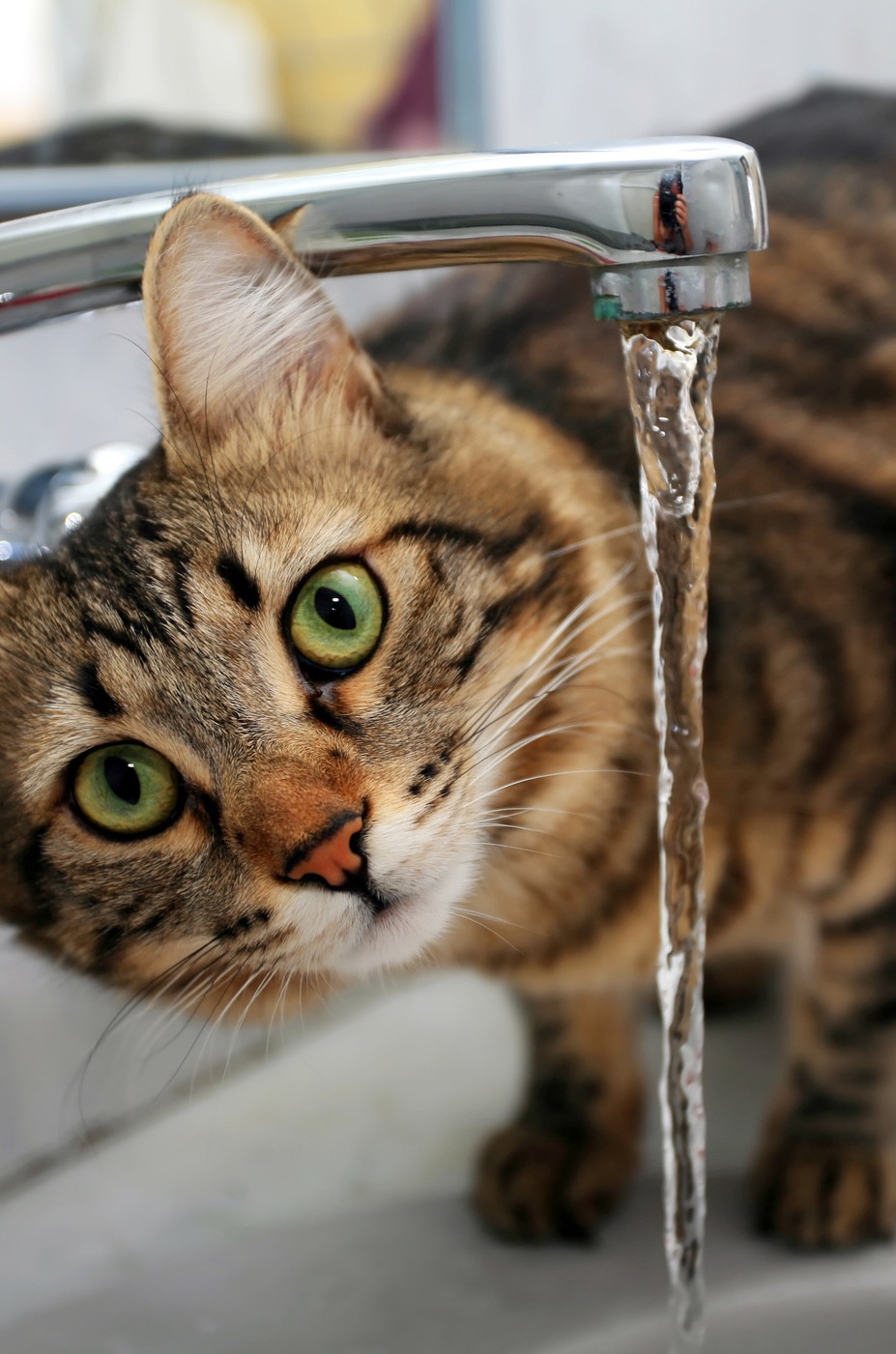
- Leave the faucet running while your cat is in the kitchen with you to encourage them to drink by appealing to their curiosity
- Add water to your cat’s meals by mixing 1-3 tbsp into their dry food or wet food
- Reward your cat with attention, affection and treats (if they’re food motivated) after they drink water
Following these cat hydration tips will help your cat stay hydrated year-round, especially in the summer heat.
HOW MUCH WATER SHOULD DOGS & CATS DRINK EACH DAY?
Your pet’s recommended daily water intake depends on factors including their size and weight, activity level, diet and the climate where you live. In general, we recommend following these guidelines when it comes to dog and cat hydration.
HOW MUCH WATER SHOULD MY DOG DRINK?
Most dogs need between ½ and 1 oz of water per pound of body weight each day. For example, a 40-lb dog typically needs about 20–40 oz (or 2½ to 5 cups) of water daily – although activity level, diet and weather can affect hydration needs.
Dogs living in hot, dry climates will likely drink more water than dogs living in cooler areas. Active dogs will need more water than dogs who prefer light exercise. And dogs who consume a raw, fresh or wet food diet will likely drink less water than dogs who eat dry food, since they get more moisture from their food.
HOW MUCH WATER SHOULD MY CAT DRINK?
Most cats need approximately 4 oz of water per 5 lb of body weight per day. For example, a 10-lb cat would need 8 oz (or 1 cup) of water daily. Cats that eat dry food typically require more drinking water than cats eating wet, fresh or raw diets.
Keeping your pet hydrated is important 365 days of the year, but it’s especially critical during the summer, when high temps can worsen dehydration. Following these pet hydration tips will help your BFF stay happy, healthy and hydrated throughout the summer season and beyond.
ASK AN EXPERT: FREQUENTLY ASKED QUESTIONS ABOUT PET HYDRATION
Can a Dog Become Dehydrated Overnight?
Yes. Dogs can become dehydrated overnight, especially if they’re sick, overheated, experiencing diarrhea or vomiting, or if they don’t have access to fresh water.
Can Cats Get Dehydrated Even If They Stay Indoors?
Yes. Indoor cats can become dehydrated, especially if they eat a dry food diet or naturally drink very little water.
What Are the First Signs of Dehydration in Pets?
Early signs of pet dehydration include dry gums, excessive panting, low energy, thick saliva and reduced appetite.
When Should I Call a Vet If My Pet Is Dehydrated?
Contact your veterinarian immediately if your pet refuses water, shows severe lethargy, vomiting, diarrhea, sunken eyes or signs of heatstroke.